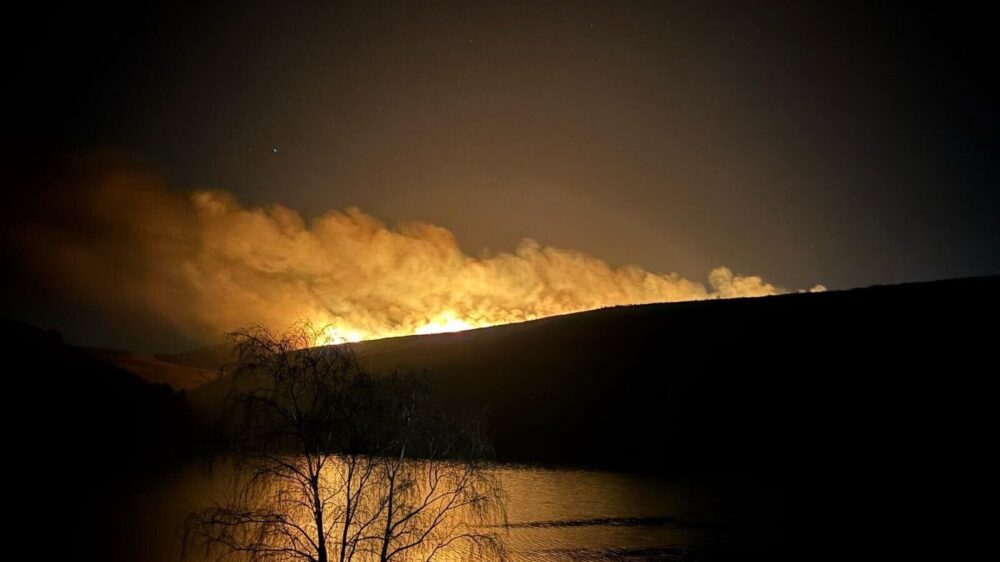






Wildfire risk and role of grazing to be highlighted to Farming Minister at NSA Sheep Event
27th July 2026
The vital role of modern livestock farming in controlling the wildfire risk will be brought to the attention of the Government at the National Sheep Association (NSA) Sheep Event tomorrow (Tuesday 28th July), taking place at The Three Counties Showground, Malvern, Worcestershire, WR13 6NW.
The need for an updated take on the traditional role of grazing and protecting the uplands will be addressed in discussions with Government Minister Stephen Morgan during the anticipated NSA Breakfast Club seminar kicking off a day of activity at the event. NSA Chief Executive Phil Stocker MBE will join Minister Morgan in discussion highlighting the need for a a modern, technology based, approach to managing the uplands as a means of limiting wild fires.
Mr Stocker says: “The question for me is how can we incentivise, encourage and reward traditional mixed grazing in our upland regions that deliver for nature and protects natural resources including soil, peatlands, water and air quality.
“We need to explore ways to make more intense shepherding and livestock management economically viable and attractive, using people and technology, such as GPS tags. If we can graze sheep and cattle in ways to deliver high value nature and vegetation habitats, and it costs money to do this, then in my view it’s a good use of agri-environment funds.
“In doing so, we would reduce the risk of out of control wildfires and protect nature.”
Mr Stocker stresses it is a myth that farmers have little interest in nature or the natural environment. This must be dispelled, as farmers and shepherds have an intimate knowledge of the birds, mammals and insects around them and do want to see them protected. Traditional farming practices have long protected so much of the upland ecology.
Upland farming policy should be supporting a reintroduction of some ‘old fashioned’ approaches that can be modernised using appropriate technology. It would be a good use of R&D and innovation funds.
Mr Stocker continues: “Ongoing grazing reductions in many of our uplands and the impact of climate change is hitting us more severely and more quickly than many expected.
“Wildfires are bad at any time – they cause air pollution, emit carbon, damage peatlands and put human and animal safety at risk, but what makes them worse is that, with recent dry springs, they are happening at peak nesting and breeding time.”
NSA was highlighting the risks of wildfires in ‘The complimentary role of sheep in Less Favoured Areas’, relating to changed land use in the uplands and reduced stocking rates, as far back as 2012. At the time there were accusations of sensationalising something that for many was more a risk than an eventuality.
Mr Stocker concedes that 40 years ago blunt policy instruments caused overgrazing by sheep. These days, far more areas are being damaged by undergrazing and a lack of management. In many cases, upland livestock systems have been eroded to the point that farmers and shepherds can’t justify spending time out on the hill.
The result of this can be areas that are getting too much grazing and vast areas are undergrazed, dominated by bracken, molinia grass and gorse. The fuel load has become immense and once alight, these fires can be very difficult to control.